
In AI We Trust
In my research I've asked AI leaders in the publishing industry how AI is currently affecting their organisation. What is the 'maturity' level, and in particular, how has AI affected their key processes, especially the end-to-end publishing process, from author submission to publication.
Built on structured interviews with senior leaders across 22 organisations, from global publishing houses to specialist societies, presented in London and to the board of the International Publishers Rights Organisation (IPRO) in 2026.
What the research shows
AI is deployed by most if not all publishers. A process to check and validate what AI spits out is 'in the making' at best, and still absent for others.
The biggest concerns raised in the research are if the quality bar of the publishing houses and their books and journals can still be met, and if the capacity to review the content is sufficient.
Then there is the move from the question 'Is everything checked' to: can we prove we checked it. Incorporating AI checks in audit trails is now part of the dilemma.
The series
Through the autumn of 2026 the findings are published as a short series on LinkedIn, one theme at a time.
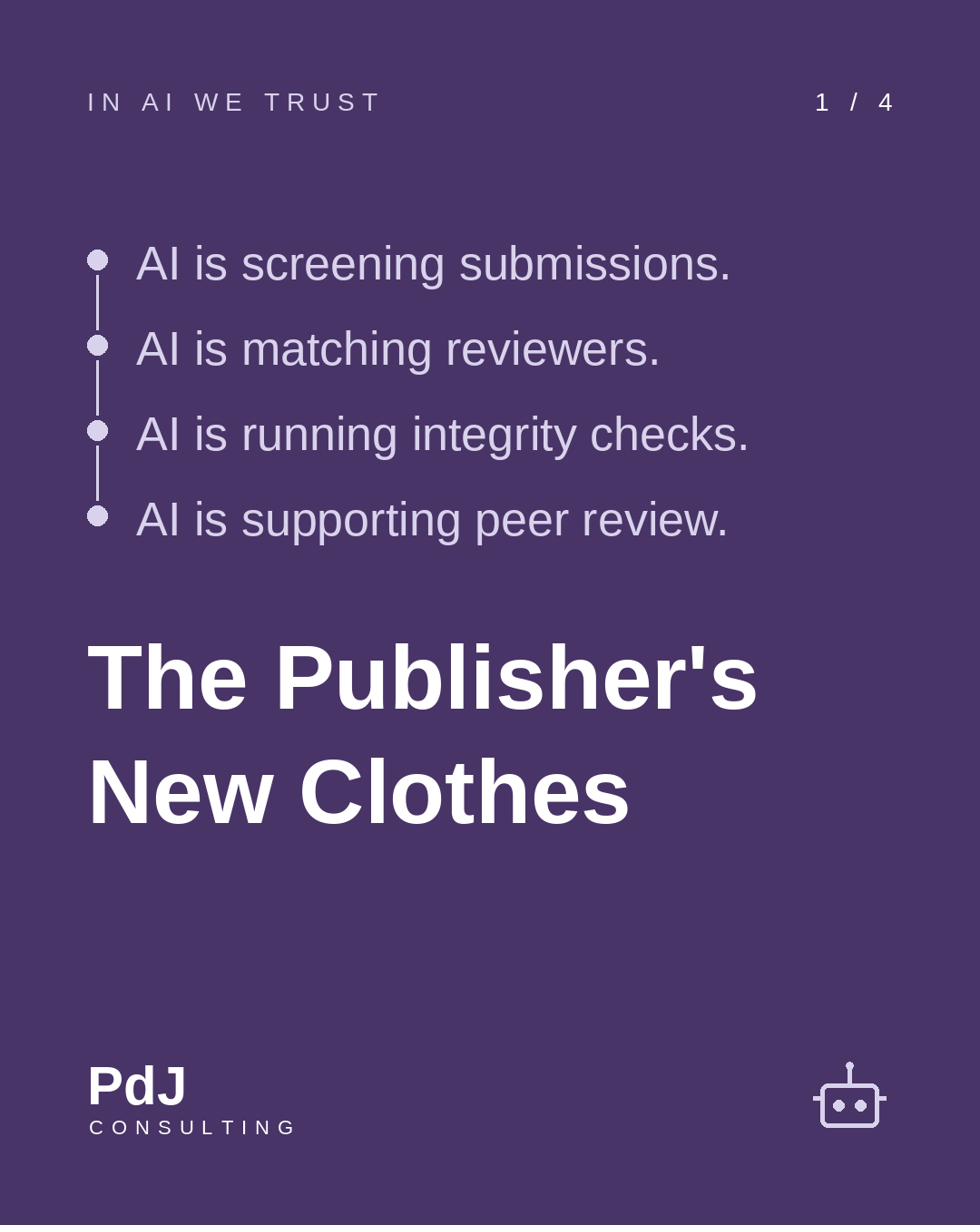
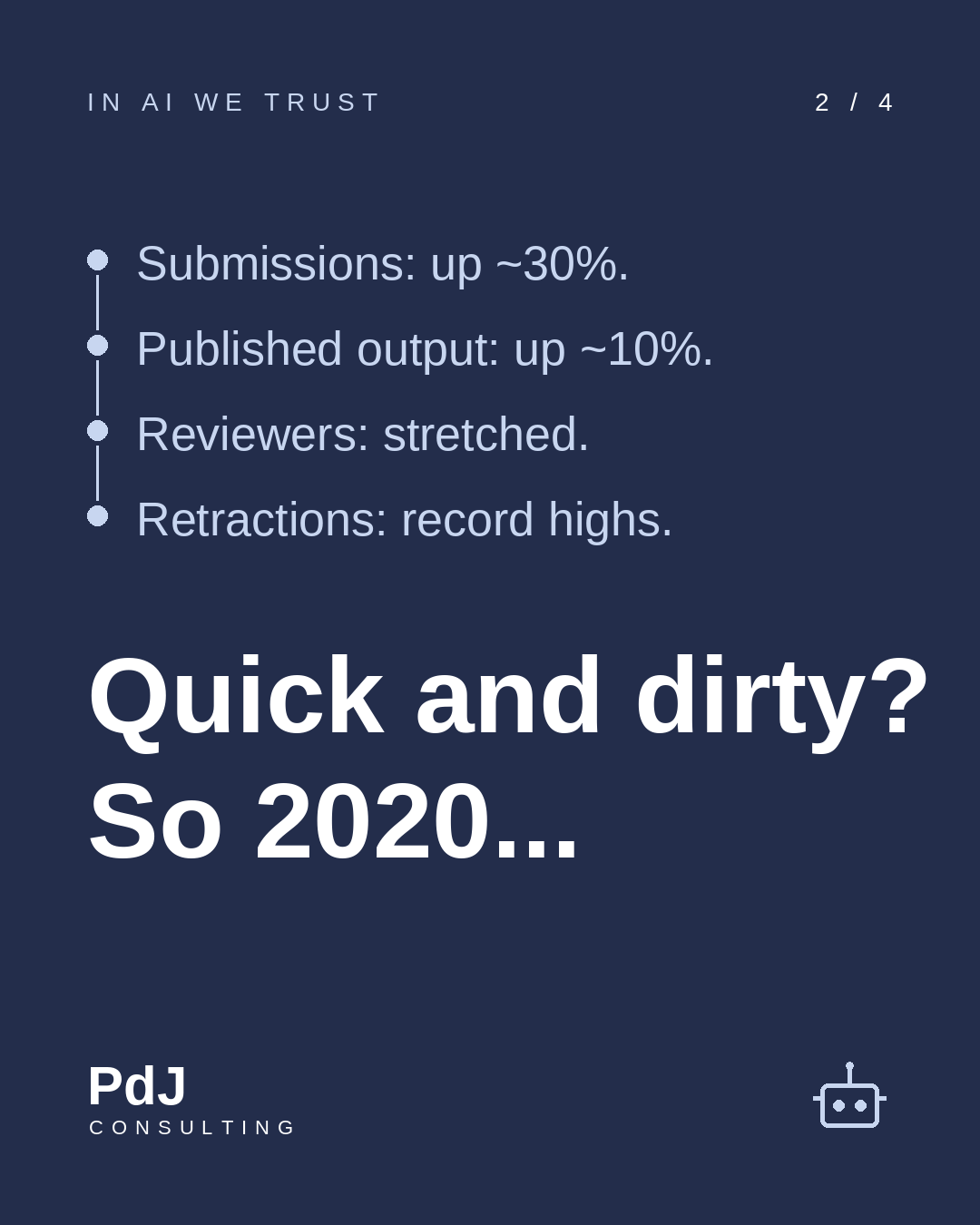

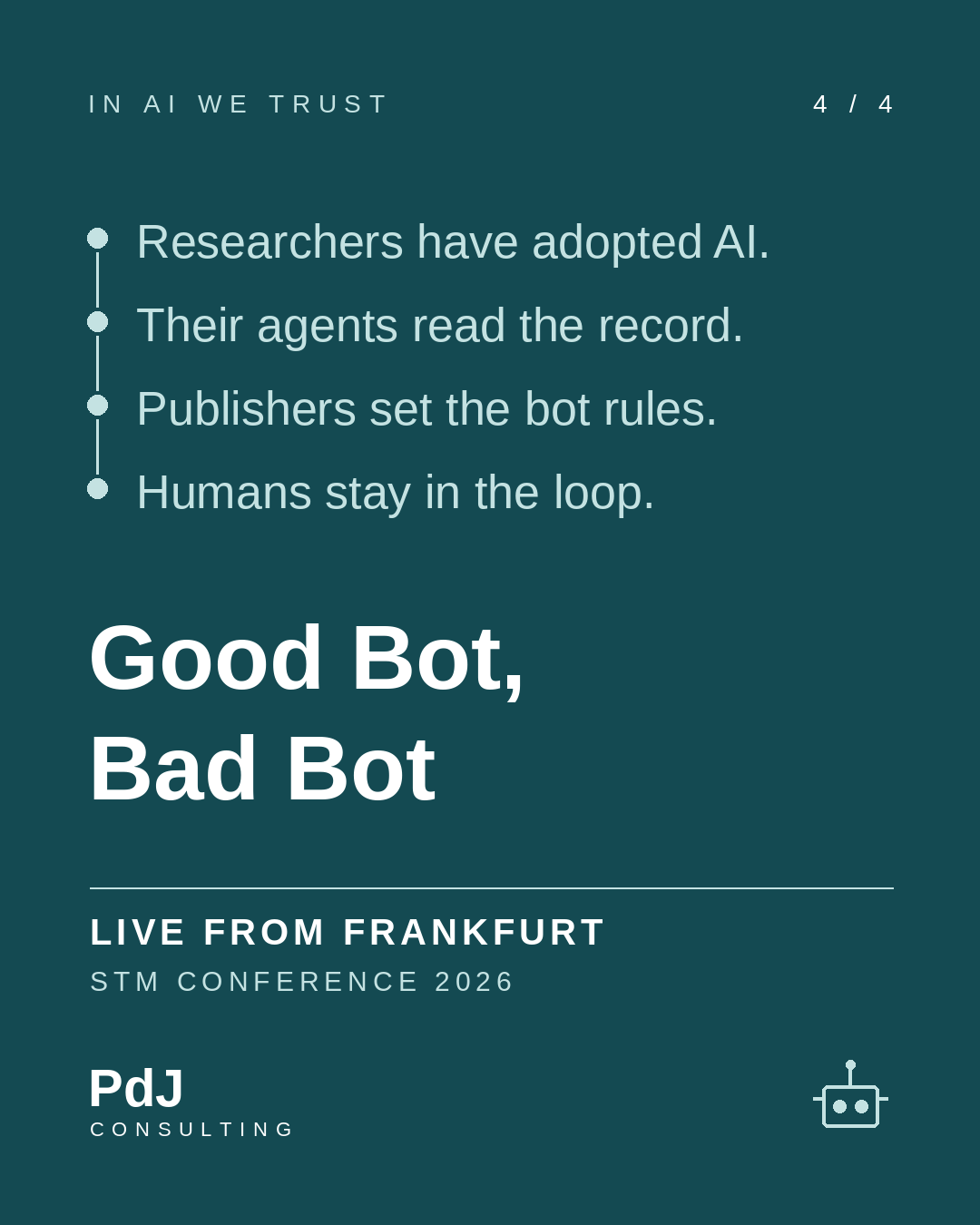
Click a card to read the post, and follow the series on LinkedIn. Part four closed the series in October, live from the STM Conference and the Frankfurt Book Fair. A curated selection of earlier writing is on the posts page.
Request the full deck
The complete findings, on request
If you would like to receive the slide deck, please do use the contact form, leave your details and you'll receive a copy in PDF.
Use the contact formTake part in the second round
AI in educational publishing
From September to mid November 2026 the research extends into educational use cases, from learning content to assessment. If your organisation is deploying AI in education and you are willing to share your experience in a confidential conversation of about half an hour, you are welcome to take part. All participants receive the findings back.
Take partResearch principles
Anonymised and aggregated by default. Findings are presented as patterns across the set. No organisation, person or quote is attributed without explicit consent.
Separated from client work. Research conversations and commercial engagements are strictly firewalled. Nothing shared in a research conversation travels into client work, and clients gain no access to research participants or their input.
Shared back with participants. Everyone who takes part receives the findings in full.
Open to commissioned research. The practice also undertakes commissioned market validation and strategy research for clients, under the same participant protections.